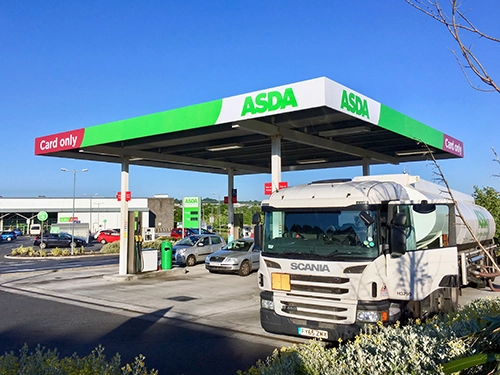

Walk into any pub, workplace canteen, or internet forum, and you’ll find passionate advocates on both sides of the supermarket versus branded fuel debate. “Shell’s petrol keeps your engine cleaner and gives better MPG,” insist some drivers, while others counter with “it all comes from the same refineries—you’re just paying for the logo.” The price difference fuels the controversy: branded fuel typically costs 3-8p per litre more than supermarket alternatives, translating to £3-£8 extra per tank or £150-£400 annually for regular drivers.
With household budgets under pressure and fuel prices volatile, the question matters: does that premium actually buy you anything beyond marketing? Or are budget-conscious motorists genuinely compromising their vehicles by choosing Asda over Shell?
This article cuts through the marketing claims and internet mythology with scientific evidence, independent testing, economic analysis, and expert testimony. You’ll discover what actually differs between fuels, whether those differences materially affect your vehicle or wallet, and crucially—when premium fuel makes sense and when it’s money down the drain.
What’s Actually Different?
The inconvenient truth that both fuel brands and supermarkets would rather you didn’t focus on: all standard unleaded petrol sold in the UK must meet identical British and European specifications. Whether you fill up at Shell, BP, Tesco, or Asda, the fuel must comply with BS EN 228 standard, which defines strict parameters for everything from octane rating to sulfur content, volatility, and composition.
This means the fundamental fuel—the hydrocarbons that actually combust in your engine—is essentially identical across all retailers. It’s refined to the same specifications, contains the same octane rating (95 RON for standard unleaded), and delivers the same energy content per litre. The base product leaving refineries is, for practical purposes, indistinguishable.
Where differences emerge is in the additive packages blended into fuel at the point of distribution. After base fuel leaves the refinery, it travels to distribution terminals where each retailer adds their proprietary additive package. These additives include:
- Detergents: Designed to clean fuel injectors and intake valves, preventing deposit buildup
- Corrosion inhibitors: Protect fuel system components from oxidation and rust
- Anti-icing agents: Prevent water in fuel from freezing in cold weather
- Friction modifiers: Claimed to reduce engine friction (though fuel rarely contacts moving metal surfaces directly)
- Combustion improvers: Marketing claims suggest enhanced burn efficiency
- Stabilizers: Slow fuel degradation during storage
Branded retailers—Shell, BP, Esso, Texaco—claim their additive packages are superior, more concentrated, or more advanced than supermarket alternatives. Supermarkets counter that their additives meet all requirements and provide adequate protection for modern engines.
Premium fuels (Shell V-Power, BP Ultimate, Tesco Momentum) represent a different proposition entirely. These feature:
- Higher octane ratings (typically 97-99 RON versus 95 RON standard)
- Enhanced additive packages with higher concentrations
- Marketing claims of engine cleaning, performance improvements, and efficiency gains
- Significantly higher prices (10-15p per litre premium)
The supply chain reality complicates the brand loyalty argument. The UK operates a shared distribution infrastructure—fuel from BP, Shell, ExxonMobil, and other refineries gets pooled at regional terminals, then distributed to retailers. Your “Shell” petrol might originate from an Esso refinery, while Tesco’s fuel could come from Shell’s refinery. The only differentiation occurs when proprietary additives are blended in at the terminal immediately before delivery to individual stations.
This shared infrastructure means the base fuel quality is virtually identical—it’s the final additive blend that creates any meaningful difference. The question becomes: are branded additive packages sufficiently better to justify the premium?
The Science of Fuel Additives
Understanding what additives actually do—versus what marketing claims they do—is essential for evaluating whether premium pricing delivers value.
Detergent additives are the most important component affecting long-term engine health. Modern fuel injection systems operate at extremely high pressures with microscopic tolerances. Deposits accumulating on injector tips can disrupt spray patterns, reducing efficiency and increasing emissions. Intake valve deposits (particularly in port-injected engines) restrict airflow and affect combustion quality.
Quality detergent additives demonstrably reduce these deposits. Independent testing by organizations like the American Automobile Association (AAA) shows that fuels meeting “Top Tier” detergent standards—including Shell, BP, Esso, and surprisingly, some supermarket fuels—maintain significantly cleaner injectors than minimum-specification fuels. The difference isn’t academic: severely contaminated injectors can reduce fuel economy by 2-4% and increase emissions substantially.
However, the critical question is whether branded standard fuels provide meaningfully better detergency than supermarket standard fuels. All UK fuels must meet minimum detergent requirements under BS EN 228. Branded retailers claim their packages exceed minimums, but supermarkets argue their formulations adequately protect modern engines. Independent verification of these competing claims is limited because additive formulations are proprietary trade secrets.
Friction modifiers feature prominently in premium fuel marketing but face skepticism from engineers. Fuel passes through the combustion chamber where it burns—it doesn’t directly contact most engine components except briefly within the combustion chamber and exhaust. The primary lubrication for pistons, bearings, and valves comes from engine oil, not fuel. Some engineers dismiss friction modifier claims as marketing theater, while others acknowledge potential marginal benefits to fuel pump longevity and upper cylinder lubrication.
Anti-corrosion additives protect fuel system components from oxidation, particularly important for vehicles stored for extended periods or those operating in humid environments. All fuels contain these additives; the question is concentration and effectiveness. Anecdotal evidence suggests branded fuels may offer slightly better protection for infrequently used vehicles, but controlled testing is scarce.
Octane ratings deserve special attention because they’re measurable, significant, and often misunderstood. Standard unleaded is 95 RON (Research Octane Number); premium fuels are typically 97-99 RON. Higher octane fuel resists pre-ignition (knocking) under compression, allowing engines designed for premium fuel to run more aggressive timing and boost pressures.
For engines designed for 95 RON fuel, using 97-99 RON provides no benefit. Modern engine management systems cannot dynamically adjust to take advantage of higher octane—they’re calibrated for the specified fuel grade. Marketing claims that premium fuel delivers power or efficiency gains in standard engines are largely misleading unless the engine specifically requires or recommends higher octane.
Independent testing provides the most credible evidence. The German automobile club ADAC conducted extensive testing comparing branded and supermarket fuels across multiple vehicles and found:
- Detergent effectiveness varied between fuel brands but didn’t consistently favor branded over supermarket
- Premium fuels (higher octane) provided no economy or performance benefits in vehicles designed for 95 RON
- Long-term deposit accumulation showed minimal differences between quality supermarket fuels and branded alternatives
- The primary variable was whether fuels met enhanced detergent standards (like Top Tier), not whether they were branded or supermarket
The UK’s AA and Which? consumer organization reached similar conclusions: fuel quality differences between major retailers are marginal for modern vehicles in normal use.
Real-World MPG Testing
Laboratory testing reveals chemical composition, but the question most drivers care about is simpler: “Do I get more miles per tank from Shell than Asda?” Real-world evidence provides illuminating but nuanced answers.
Independent testing organizations have conducted back-to-back comparisons with mixed results. Auto Express ran a comprehensive test using identical vehicles, routes, and driving styles, comparing supermarket versus branded standard fuel. Their finding: fuel economy differences fell within the margin of measurement error (typically ±2%), making it impossible to definitively attribute any variation to fuel brand rather than ambient conditions, traffic patterns, or other variables.
What Car? magazine conducted similar testing and found marginally better economy with premium fuels (Shell V-Power, BP Ultimate) versus standard fuels—around 1.5-2% improvement. However, this compared premium to standard, not branded standard to supermarket standard. When comparing like-for-like (standard unleaded across brands), differences were statistically insignificant.
Manufacturer recommendations are revealing in their consistency: virtually every mainstream manufacturer specifies 95 RON unleaded for their standard vehicles and notes that any fuel meeting UK/EU specifications is acceptable. They explicitly don’t require branded fuel. Even premium manufacturers like BMW, Mercedes, and Audi specify 95 RON as standard (98 RON for some high-performance variants) but don’t mandate specific brands.
If Shell or BP fuel delivered meaningfully superior performance or longevity, manufacturers would specify it to protect warranty claims and brand reputation. They don’t—suggesting engineering teams see no material difference.
User-reported differences from forums and surveys show enormous variance, which itself is instructive. Drivers report everything from “5 MPG improvement with Shell!” to “no difference whatsoever” to “better with supermarket fuel.” This wild variation strongly suggests confirmation bias and placebo effect rather than genuine fuel differences.
The psychological phenomenon is well-documented: if you pay 5p per litre extra, you’re primed to perceive better performance. Drivers who’ve convinced themselves premium fuel is superior unconsciously adopt slightly more conservative driving styles, attribute good fuel economy tanks to the premium fuel while dismissing poor tanks as anomalies, and notice improvements that don’t exist in controlled conditions.
Statistical analysis of crowdsourced fuel economy data from apps like Fuelly and Spritmonitor (which aggregate millions of fill-ups) shows no consistent brand-based patterns. When controlling for vehicle model, engine type, and driving conditions, fuel brand explains virtually zero variance in reported fuel economy. What does matter enormously:
- Driving style: Aggressive acceleration and braking can reduce economy by 20-30%
- Speed: Motorway driving at 80mph versus 65mph costs 15-20% economy
- Vehicle maintenance: Underinflated tires, worn spark plugs, dirty air filters (3-10% impact)
- Journey type: Cold starts and short trips devastate efficiency versus long, warm journeys
- Weather and temperature: Winter fuel economy is typically 10-15% worse than summer
- Vehicle load and roof racks: Significant aerodynamic and weight impacts
The inconvenient reality: your right foot affects fuel economy 10-20 times more than your fuel brand choice. A driver achieving 38 MPG with Asda fuel and conservative driving would likely achieve 36-37 MPG with the same aggressive driving using Shell—a difference attributable to behavior, not fuel.
Variables that confound personal testing make definitive self-experimentation nearly impossible:
- Ambient temperature fluctuations of 5-10°C between tanks change economy
- Traffic conditions vary tank-to-tank
- Brim-to-brim measurement errors (fuel pumps automatically cut off at slightly different points)
- Unconscious driving behavior changes when “testing”
- Fuel gauge and trip computer inaccuracies (often optimistic by 5-10%)
For an individual to definitively prove fuel brand affects their economy would require controlled conditions impossible to achieve in normal driving: identical routes, speeds, temperatures, traffic conditions, and repeated testing over dozens of tanks. Even then, the expected difference (if any) likely falls within measurement noise.
The placebo effect in fuel economy is powerful and documented. Studies where participants were told they’d received premium fuel (but actually received standard) reported improved performance and economy—despite receiving identical fuel to control groups. The expectation creates the perception.
The Economic Reality Check
Even if branded fuel delivered marginal improvements, does the mathematics support paying the premium? Let’s examine realistic scenarios with actual numbers.
Base scenario assumptions:
- Annual mileage: 10,000 miles
- Fuel economy: 40 MPG
- Annual consumption: 250 gallons (1,136 litres)
- Supermarket fuel price: £1.35/litre
- Branded fuel premium: +£0.05/litre (conservative estimate)
Annual cost difference: £57
Now let’s consider claimed improvements. Branded fuel marketing suggests “up to 2% better economy” (taking the optimistic upper end of any credible claims):
Improvement from branded fuel:
- 2% improvement on 40 MPG = 40.8 MPG
- New annual consumption: 245 gallons (1,114 litres)
- Litres saved: 22 litres
Value of fuel saved at £1.35/litre: £30
Net cost of using branded fuel: £57 – £30 = £27 extra annually
This breaks even only if branded fuel delivers 4.2% better economy—more than double even optimistic marketing claims and well beyond any credible independent testing results.
The mathematics becomes more brutal at realistic improvement levels. If branded fuel delivers the 0-1% improvement suggested by controlled testing:
- 1% improvement = save 11 litres annually = £15 value
- Net cost: £57 – £15 = £42 extra annually for negligible benefit
For premium fuels (Shell V-Power, BP Ultimate), the economics are even worse for vehicles designed for 95 RON:
- Premium typically costs 10-15p more per litre
- Annual extra cost: £114-£170
- Would require 8-12% improvement to break even
- Actual improvement in vehicles not requiring premium: 0-2%
When branded/premium fuel makes financial sense:
- Never, for standard vehicles in normal use, from a pure economy perspective
- Potentially, for vehicles explicitly requiring 98 RON (some performance models)
- Arguably, for valuable classics or infrequently used vehicles where enhanced additives might provide better long-term protection
- Possibly, if you drive a high-performance vehicle on track days where premium fuel’s knock resistance enables full performance
The CheckFuelPrices.co.uk advantage completely changes the calculation. Rather than paying a 5p premium for branded fuel, use CheckFuelPrices.co.uk to find the cheapest fuel—often supermarket stations undercut branded forecourts by 5-8p per litre. For our example driver:
- Finding fuel 7p cheaper via price comparison
- Annual saving: £80
- This dwarfs any theoretical efficiency gain from branded fuel
The cold mathematics: paying attention to price per litre saves far more than paying attention to brand. A driver obsessing over Shell versus Asda while ignoring a 6p price variation at different stations is optimizing the wrong variable.
Special Cases Where Brand Might Matter
While branded fuel rarely justifies its premium for typical drivers, specific scenarios exist where fuel choice genuinely affects performance, longevity, or reliability.
High-performance vehicles with manufacturer recommendations represent the clearest case. Some vehicles explicitly require or recommend 98+ RON fuel:
- Porsche 911 Turbo models
- BMW M-series variants
- Mercedes-AMG models
- Some Ford Focus ST and RS models
- Various other performance-oriented vehicles
For these vehicles, premium fuel isn’t optional marketing—it’s engineering necessity. Their engine management systems are calibrated assuming higher octane, enabling aggressive ignition timing and boost pressure. Using 95 RON fuel forces the ECU into knock-protection mode, retarding timing and reducing performance/efficiency. Here, premium fuel delivers the promised benefits because the engine is designed to exploit it.
Very old vehicles with carburetor systems may genuinely benefit from enhanced additive packages. Modern fuel injection systems are sophisticated and robust; 1970s-1990s carburetors with their narrow jets and passages are more vulnerable to varnish deposits and blockages. Some classic car specialists recommend branded or premium fuels for better detergency and storage stability, though equally effective solutions include fuel additives designed for classic cars or simply running the engine regularly.
Infrequently used vehicles face fuel degradation issues where enhanced additives might help. Petrol begins deteriorating within weeks—particularly E10 with its hygroscopic ethanol content. Vehicles started monthly or less (classic cars, seasonal vehicles, backup cars) suffer from:
- Fuel oxidation and varnish formation
- Phase separation in ethanol-blended fuels
- Condensation and water accumulation in tanks
Premium fuels often include enhanced stabilizers and may degrade slightly slower. However, purpose-designed fuel stabilizers added to any fuel provide superior protection at lower cost than exclusively using premium fuel.
Extreme cold weather performance occasionally favors branded fuels. All UK petrol includes anti-icing additives, but winter-grade fuels from major brands may include enhanced packages. In practice, this rarely matters for vehicles in regular use—diesel gelling is a genuine cold-weather concern; petrol freezing issues are exceptionally rare in UK conditions.
Motorsport and track day use represents perhaps the most legitimate case for premium fuel. Track driving involves sustained high-load operation where:
- Engines operate at high RPM for extended periods
- Turbochargers generate maximum boost
- Knock margin becomes critical for reliability
- Fuel cooling properties matter
Here, shell V-Power, BP Ultimate, or dedicated racing fuels (99+ RON) deliver measurable advantages. However, this represents perhaps 0.1% of UK driving and doesn’t justify premium fuel for the commute home from the track.
Modern direct-injection engines and carbon buildup have generated controversy. Direct injection sprays fuel directly into combustion chambers, meaning it never washes over intake valves. In port-injection engines, fuel detergents clean intake valves continuously; in direct-injection engines, valves accumulate carbon deposits over time regardless of fuel quality. Some manufacturers and specialists recommend periodic “Italian tuning” (high-RPM operation) or intake cleaning services. Fuel brand affects this marginally at most—the phenomenon stems from engine design, not fuel choice.
The honest assessment: for 95%+ of drivers, these special cases don’t apply. If your vehicle’s handbook specifies 95 RON unleaded and you drive normally in typical UK conditions, branded fuel provides no meaningful advantage.
Expert Opinions
Cutting through marketing requires consulting people who work with engines daily and have no commercial stake in fuel brand loyalty.
Independent mechanics with decades of experience offer remarkably consistent perspectives. Speaking to technicians at several UK independent garages revealed a common theme: “We see no pattern of fuel-related issues correlating with supermarket versus branded fuel use.” Mechanics report fuel system problems from contaminated fuel (rare), water ingress, and neglected maintenance—but not systematic differences between vehicles using Asda versus Shell.
One experienced technician noted: “I’ve worked on vehicles with 150,000+ miles using exclusively supermarket fuel with perfectly clean fuel systems, and I’ve seen similar mileage vehicles using premium branded fuel with deposit issues. It comes down to maintenance, driving patterns, and vehicle design—not fuel brand.”
Automotive engineers from both manufacturers and independent consultancies emphasize that modern engines are designed for 95 RON fuel meeting BS EN 228 specifications—period. If fuel meets standards, it’s suitable. One powertrain engineer from a major manufacturer stated bluntly: “Our warranty covers any fuel meeting UK specifications. If branded fuel was necessary for reliability, we’d mandate it. We don’t because it isn’t.”
Engineers acknowledge that additive packages differ but emphasize modern fuel injection systems are remarkably tolerant. Electronic control units compensate for fuel variations through adaptive learning, oxygen sensor feedback, and knock sensors. Marginal additive differences don’t meaningfully affect well-maintained vehicles.
Fuel industry insiders provide the most cynical perspective. Several individuals who’ve worked in refining and distribution (speaking off-record) confirmed what the supply chain suggests: base fuel is largely identical, additives create differentiation, but the quality gap between reputable supermarkets and branded forecourts is minimal. One former distribution manager noted: “The additives cost pence per thousand litres. The price premium you pay is mostly marketing and brand positioning, not additive quality.”
They also confirmed that supply disruptions occasionally mean fuel destined for one brand gets delivered to competitors—your “premium” branded fill-up might be identical to the supermarket fuel you avoided, depending on supply logistics.
Consumer advocacy groups like Which? and the AA have consistently tested and evaluated fuels. Their findings uniformly show:
- All major retailers (supermarket and branded) provide fuel suitable for modern vehicles
- Premium fuels don’t deliver economy improvements justifying their cost for standard vehicles
- Long-term reliability shows no consistent brand-related patterns
- The best fuel is clean, correctly specified (95 or 98 RON as required), and competitively priced
The AA’s technical experts note that fuel contamination incidents—where genuinely defective fuel causes widespread problems—have affected both branded and supermarket stations over the years. Quality control failures are rare industry-wide, not concentrated in budget providers.
Academic research on fuel additives is limited because formulations are proprietary and funding often comes from interested parties. Independent studies that do exist (primarily from organizations like SAE International and European automotive research institutes) confirm that detergent additives meeting enhanced standards (like Top Tier) maintain cleaner engines than minimal-specification fuels—but these enhanced standards are met by some supermarket fuels as well as branded alternatives.
The expert consensus is unambiguous: for typical vehicles in normal use, fuel brand doesn’t materially affect reliability, performance, or economy provided it meets specifications. The obsession over brand loyalty is misplaced energy that would be better directed toward proper maintenance, careful driving, and price comparison.
The Verdict
After examining specifications, testing, economics, and expert opinion, the answer to “Does Shell really give you more miles than Asda fuel?” is definitively: No—not in any meaningful, cost-effective way for typical drivers and vehicles.
The straight facts:
- Base fuel is essentially identical across all UK retailers—it must meet the same specifications and often originates from shared refineries
- Additive packages differ marginally but all major retailers (including reputable supermarkets) provide adequate protection for modern engines
- Independent testing shows no consistent economy or performance advantages for branded standard fuel over supermarket standard fuel
- Premium fuels (higher octane) provide no benefits for vehicles designed for 95 RON, making them poor value for most drivers
- The economics don’t support branded fuel even accepting optimistic efficiency claims—price per litre matters far more than brand logo
- Expert consensus from mechanics, engineers, and consumer advocates confirms fuel brand doesn’t meaningfully affect reliability for well-maintained modern vehicles
Best practices for fuel selection:
For most drivers: Use the cheapest fuel meeting your vehicle’s specification (95 or 98 RON as required) from a reputable retailer. The money saved dwarfs any theoretical additive advantage from branded alternatives.
For high-performance vehicles requiring 98 RON: Use the specified premium fuel—but shop for price. Shell V-Power and BP Ultimate are functionally equivalent; buy whichever is cheaper.
For classic cars and infrequently used vehicles: Consider premium fuel for enhanced stabilizers, or add dedicated fuel stabilizer to whatever fuel you choose. Run the engine regularly and keep tanks topped up to minimize degradation.
For everyone: Driving style affects fuel economy 10-20 times more than fuel brand. Smooth acceleration, maintaining momentum, appropriate speed, and proper vehicle maintenance (tire pressure, servicing, air filters) deliver guaranteed, substantial improvements. Obsessing over fuel brand while ignoring these factors is optimizing trivia while ignoring fundamentals.
The biggest factors affecting fuel economy (in order of impact):
- Driving behavior and style (20-30% variance)
- Journey type and conditions (15-25% variance)
- Vehicle maintenance (5-15% variance)
- Weather and seasonal factors (10-15% variance)
- Vehicle load and aerodynamics (5-10% variance)
- Fuel brand (0-1% variance at best)
Notice what’s last on that list.
Smart Fueling Strategy
Rather than brand loyalty, adopt a strategic approach to fuel purchasing that maximizes value without compromising vehicle health.
For standard vehicles (requiring 95 RON):
- Use price comparison religiously: Tools like CheckFuelPrices.co.uk show real-time prices across local stations—variations of 5-10p per litre between stations are common
- Choose reputable retailers: Stick with major supermarkets (Tesco, Asda, Sainsbury’s, Morrisons) and established branded forecourts—avoid no-name stations of uncertain origin
- Buy where convenient at competitive prices: Don’t drive miles out of your way for 2p savings, but if a budget station sits on your regular route, use it
- Ignore brand marketing: Shell, BP, Esso standard unleaded provides no material advantage over Tesco, Asda, Sainsbury’s standard unleaded
For vehicles requiring/recommending 98 RON:
- Compare premium fuel prices: Shell V-Power, BP Ultimate, Tesco Momentum, and Esso Supreme+ are functionally equivalent—buy the cheapest
- Check CheckFuelPrices.co.uk for premium fuel pricing across stations
- Consider whether you actually need it: Some vehicles “recommend” premium without requiring it—consult owner forums and manufacturer documentation
For classic cars and special cases:
- Use E5 super unleaded if E10 compatibility is questionable
- Add quality fuel stabilizer for vehicles stored between uses
- Consider branded premium if your vehicle genuinely benefits (consult marque specialists)
- Run the engine regularly to prevent fuel degradation
For maximum savings regardless of vehicle:
- Fill up at supermarkets on your regular routes: Their fuel is fine; their prices are typically cheapest
- Use CheckFuelPrices.co.uk to identify local price outliers—sometimes branded stations run promotions making them cheaper than supermarkets
- Join loyalty schemes: Tesco Clubcard points, Nectar points, BP Rewards, and Shell Go+ can offset costs slightly
- Fill up mid-week: Prices often rise Thursday/Friday before weekend travel
- Avoid motorway services: Typically 10-15p per litre premium for location convenience
Testing for yourself (if you’re determined):
- Establish a baseline: Run 5+ tanks of your regular fuel, recording exact litres, miles, and MPG
- Switch fuels: Use 5+ tanks of alternative fuel under similar conditions
- Control variables: Same driving routes, similar weather, consistent driving style
- Analyze statistically: Compare average MPG accounting for standard deviation—differences under 3% are likely noise
Most drivers will conclude their time is better spent on price comparison than fuel testing.
The ultimate truth: You’ll save far more money finding fuel 5p cheaper using CheckFuelPrices.co.uk than you’ll ever gain from obsessing over branded versus supermarket fuel quality. Check prices, buy cheap from reputable retailers, drive smoothly, and maintain your vehicle properly—that’s the smart fueling strategy that actually impacts your bank balance.
The debate over Shell versus Asda is mostly mythology. The debate over £1.32 versus £1.39 per litre is pure mathematics—and the mathematics doesn’t care about the logo on the pump.