
Introduction
With petrol prices continuing to fluctuate and the cost of living showing no signs of easing, British motorists are feeling the pinch at the pumps more than ever. While shopping around for the cheapest fuel using tools like CheckFuelPrices.co.uk is essential, there’s another powerful weapon in your arsenal: hypermiling.
Hypermiling is the art and science of maximizing your vehicle’s fuel economy through strategic driving techniques and vehicle preparation. It’s not about driving dangerously slow or creating traffic hazards—it’s about understanding how your car uses fuel and making intelligent adjustments to reduce consumption. The results speak for themselves: dedicated hypermilers regularly achieve 20-30% improvements in fuel economy, with some extreme practitioners doubling their manufacturer’s stated MPG figures.
In this comprehensive guide, you’ll discover practical, safe techniques that can immediately improve your fuel efficiency, from simple pre-drive checks to advanced driving methods. Whether you’re a fleet manager looking to reduce operating costs, an eco-conscious driver wanting to minimize your carbon footprint, or simply someone trying to make your wages stretch further, these strategies will help you keep more money in your pocket.
Understanding Fuel Consumption Basics
Before diving into specific techniques, it’s crucial to understand how your vehicle actually uses fuel. Internal combustion engines are remarkably inefficient machines—converting only about 20-30% of the energy in petrol into actual motion, with the rest lost as heat. However, they operate most efficiently within specific parameters.
Engine efficiency sweet spots typically occur between 1,500-2,500 RPM for most petrol engines, and slightly lower for diesels. Running outside this range—whether constantly revving high or lugging the engine at very low RPM—wastes fuel. Modern engines with variable valve timing and turbochargers have broadened these efficient ranges, but the principle remains: moderate engine speeds generally mean better fuel economy.
Aerodynamics plays an increasingly significant role as speed increases. Air resistance rises exponentially with speed—doubling your speed actually quadruples the aerodynamic drag. This is why motorway driving above 70mph sees fuel economy plummet. Even small changes matter: roof boxes, bike racks, and even open windows create drag that forces your engine to work harder.
Weight and rolling resistance also significantly impact consumption. Every 50kg of extra weight in your vehicle can reduce fuel economy by approximately 2%. Meanwhile, underinflated tyres increase rolling resistance, forcing the engine to work harder to maintain speed. The condition of your tyres, wheel alignment, and even the type of tarmac you’re driving on all contribute to how much energy is required to keep your car moving.
Understanding these fundamentals helps you appreciate why the techniques that follow actually work—and why some commonly held beliefs about fuel economy are myths.
Pre-Drive Preparation
Hypermiling begins before you even start the engine. These preparation steps take minimal time but can deliver consistent improvements to your fuel economy.
Tyre pressure optimization is perhaps the single easiest improvement you can make. Underinflated tyres create excessive rolling resistance and can reduce fuel economy by 3% or more. Check your handbook or the sticker inside the driver’s door jamb for the recommended pressures—and check them monthly when tyres are cold. Some hypermilers inflate to the upper end of the recommended range or even slightly beyond (though never exceed the tyre’s maximum pressure rating stamped on the sidewall). During winter months, remember that tyre pressure drops approximately 1 PSI for every 10°C decrease in temperature.
Remove unnecessary weight from your vehicle systematically. That bag of sports equipment in the boot, the roof box you haven’t used since last summer’s holiday, the spare set of tools—all contribute to extra fuel consumption. A thorough clearout can easily remove 30-50kg from the average family car. However, don’t remove safety equipment like your spare tyre, warning triangle, or first aid kit. The weight savings aren’t worth the risk.
Route planning deserves more attention than most drivers give it. Modern sat-nav systems and apps like Google Maps can show you alternative routes and real-time traffic conditions. A slightly longer route that avoids stop-start traffic can actually use less fuel than a shorter congested route. Hills are particularly costly for fuel economy—the energy required to climb is never fully recovered when descending. Where practical, choose flatter routes, especially when carrying heavy loads.
Fuel quality and filling strategy also matters. Premium fuels often contain detergents that can help maintain engine efficiency, though the higher cost rarely justifies the marginal improvement for most vehicles. Fill up during cooler parts of the day (early morning or evening) when fuel is denser, giving you slightly more energy per litre. More importantly, use a fuel price checker like CheckFuelPrices.co.uk to find the cheapest stations near your route—saving 5-10p per litre makes a far bigger difference than any driving technique. Don’t drive miles out of your way for cheap fuel, but if there’s a budget station on your regular route, it’s worth using.
Driving Techniques That Work
The way you operate your vehicle has the most dramatic impact on fuel consumption. These proven techniques can transform your MPG figures without significantly increasing journey times.
Smooth acceleration is fundamental to fuel-efficient driving. Imagine there’s an egg between your foot and the accelerator pedal—you want to press firmly enough to make progress but gently enough not to crack the egg. Harsh acceleration dumps extra fuel into the cylinders and operates the engine outside its efficient range. Instead, accelerate gently and progressively, aiming to reach your desired speed using the highest gear possible in the shortest time. For most cars, this means shifting up before 2,000 RPM for diesels and 2,500 RPM for petrol engines.
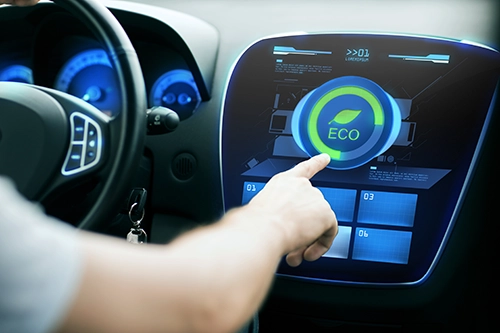
Modern automatic gearboxes often have “Eco” modes that alter shift patterns and throttle response to encourage this behavior. Use these modes for general driving, switching to “Sport” only when you genuinely need the extra performance.
Maintaining momentum is perhaps the most important skill in hypermiling. Your car’s kinetic energy represents fuel already burned—every time you brake, you’re converting that expensive fuel into waste heat. Read the road ahead constantly, looking 10-15 seconds forward. Spotting a red light early allows you to lift off the accelerator and coast toward it, potentially arriving just as it turns green without ever fully stopping. This technique alone can improve urban fuel economy by 10-15%.
Watch for other clues: brake lights ahead suggest slowing traffic, pedestrians waiting at crossings might step out, roundabouts require reduced speed. Anticipating these situations allows you to scrub off speed gradually using engine braking rather than your brake pedal.
Coasting techniques must be understood properly to be effective. Modern fuel-injected engines actually use zero fuel when you lift off the accelerator while in gear—the momentum of the car keeps the engine spinning. This is called “deceleration fuel cut-off” (DFCO). However, if you drop into neutral or depress the clutch, the engine must use fuel to keep itself running at idle.
The key is understanding when to stay in gear and when to coast in neutral. Stay in gear when approaching situations where you’ll need to slow down significantly (roundabouts, red lights, tight corners). Switch to neutral or clutch-down coasting when maintaining or slowly reducing speed on gentle downhills or when approaching situations where you’ll need minimal braking.
Optimal cruising speeds on motorways typically fall between 55-65mph for maximum fuel efficiency. At 70mph, most cars are working significantly harder against aerodynamic drag than at 60mph. Dropping from 70mph to 60mph can improve motorway fuel economy by 10-15%, though this needs balancing against journey time considerations. On longer trips, leaving 10-15 minutes earlier and cruising at 60mph in the inside lane often uses dramatically less fuel with minimal time penalty.
Cruise control is excellent for maintaining steady speeds on flat motorways, preventing the unconscious speed creep that wastes fuel. However, on hilly terrain, cruise control can be counterproductive. It will downshift and add power to maintain speed uphill, then brake or waste momentum downhill. In hilly conditions, manually controlling speed—allowing it to drop slightly uphill and increase slightly downhill—uses less fuel overall.
Air conditioning versus open windows is a genuine trade-off with no perfect answer. Air conditioning can increase fuel consumption by 10-15%, particularly in stop-start traffic. However, at motorway speeds, open windows create significant aerodynamic drag that can cost even more fuel than running the air-con. The general rule: below 40-50mph, open windows are more efficient; above this speed, air conditioning becomes the better choice. In mild weather, neither is necessary—use the fan with outside air instead.
Advanced Hypermiling Methods
Once you’ve mastered the basics, these advanced techniques can extract even more efficiency from your vehicle. Some require practice and careful judgment to execute safely.
Pulse and glide technique is the most effective advanced method for maximizing fuel economy. Rather than maintaining constant speed, you gently accelerate (pulse) to 5-10mph above your target speed, then lift off and coast in gear (glide) as speed drops back down. This takes advantage of engine efficiency at moderate loads while minimizing time spent maintaining constant speed. On modern cars with instant consumption displays, you’ll see consumption drop to zero during the glide phase. This technique works best on quiet roads where varying speed won’t frustrate other drivers. The challenge is executing it smoothly enough that passengers barely notice.
Drafting behind larger vehicles reduces aerodynamic resistance, potentially improving motorway fuel economy by 10-20%. However, this must be done responsibly and legally. Maintaining a safe following distance (the two-second rule minimum) is non-negotiable—fuel savings mean nothing if you cause an accident. Never draft closer than you would normally follow, and increase distance in wet or foggy conditions. Lorries create the best drafting effect, but even following a large SUV at normal following distances provides some benefit.
Efficient cornering means taking the racing line in reverse—using the full width of your lane to minimize steering angle, which reduces the scrubbing of tyres and maintains momentum more effectively. This only applies where it’s safe and legal to do so. On narrow country roads, prioritize safety and visibility over efficiency. The fuel saved isn’t worth the risk of a head-on collision.
Understanding your instant MPG display transforms these techniques from theoretical to practical. Modern cars show real-time fuel consumption, allowing you to experiment and immediately see results. Spend time watching how different techniques affect the display—you’ll quickly learn what works for your specific vehicle. Some cars show MPG, others show litres per 100km—both are useful once you understand them. Pay attention to your average consumption over full tanks rather than obsessing over instant readings, which can fluctuate wildly.
What NOT to Do
The hypermiling community has developed a reputation for extreme measures that cross the line from efficient to dangerous. These practices should be avoided entirely.
Never turn your engine off while moving. Some extreme hypermilers do this while coasting downhill, but it’s genuinely dangerous. You’ll lose power steering and power brakes, making the vehicle difficult to control in emergencies. Modern cars may also lock the steering column when the engine stops. The fuel savings are minimal and absolutely not worth the safety risk. Similarly, never shift into neutral on steep downhills—you need engine braking for control.
Avoid extreme drafting where you’re following closer than normal safe distances just to save fuel. Professional hypermiling competitions explicitly ban this practice because it endangers everyone on the road. The fuel saved is negligible compared to the accident risk, and you’ll be liable for any collision that results from tailgating.
Don’t drive significantly below the speed limit to save fuel if it creates hazardous conditions or excessive congestion. Traveling at 40mph on a 60mph road might improve your MPG figures, but it frustrates other drivers, encourages dangerous overtaking, and makes you a rolling obstruction. Hypermiling should never compromise safety or create traffic hazards.
Legal considerations vary by jurisdiction, but excessively slow driving can result in penalties for obstructing traffic. Additionally, any technique that reduces your ability to respond to hazards—like coasting in neutral around blind corners—could leave you liable in the event of an accident. Your insurance might also be invalidated if you’re deemed to be driving without due care and attention.
The golden rule: if a technique feels unsafe or makes you uncomfortable, don’t do it. No amount of fuel savings justifies putting yourself or others at risk.
Real-World Results and Tracking
Understanding what’s realistic helps maintain motivation without creating unrealistic expectations. Results vary significantly based on vehicle type, typical journey profile, and how consistently you apply these techniques.
Small petrol cars (like a Ford Fiesta or Volkswagen Polo) often see the most dramatic percentage improvements because they’re already fairly efficient. Achieving 20-25% above the manufacturer’s claimed combined MPG is realistic with disciplined hypermiling. Modern hybrids can exceed their official figures even more significantly because the techniques naturally optimize electric motor usage.
Larger vehicles and SUVs have more room for improvement in absolute terms but face physical limitations. A Range Rover won’t achieve Fiesta-level economy regardless of technique, but improving from 25 MPG to 32 MPG represents significant real-world savings.
Diesel vs petrol engines respond slightly differently. Diesels generally benefit more from maintaining momentum and avoiding unnecessary acceleration because they’re more efficient at partial loads. Petrol engines benefit more from staying in the 1,500-2,500 RPM range.
Measuring your improvement requires systematic tracking. Fill your tank completely, zero your trip odometer, drive normally for one tank, then fill up again noting the litres required. Divide miles driven by litres used (then multiply by 4.546 to get MPG if working in litres). Do this for 3-4 tanks to establish a baseline, then implement hypermiling techniques and track another 3-4 tanks to measure improvement.
Apps and tools make this easier. Fuelly and Fuelio are dedicated fuel tracking apps that graph your consumption over time. Many modern vehicles have built-in trip computers that calculate average consumption, though these can be optimistic by 5-10%. For the ultimate combination of savings, use CheckFuelPrices.co.uk to locate the cheapest fuel stations before filling up—combining efficient driving with paying less per litre multiplies your savings dramatically.
The fuel price checker at CheckFuelPrices.co.uk is particularly valuable because it shows real-time prices across the UK, helping you avoid expensive motorway services and find budget supermarket stations. When you’re improving your MPG by 20% through hypermiling and also paying 8p per litre less through smart fuel purchasing, the combined effect can reduce your monthly fuel bill by 30% or more.
Wrapping up
Hypermiling isn’t about transforming every journey into an obsessive fuel-saving exercise. It’s about understanding how your vehicle uses energy and making intelligent choices that reduce waste. The easiest wins—proper tyre pressure, removing excess weight, smooth acceleration, and maintaining momentum—require minimal effort but deliver consistent results.
Start with the simple techniques and build up as they become habitual. You’ll find that many hypermiling practices actually make you a safer, more aware driver because they require reading the road ahead and anticipating hazards. The fuel savings are real: most drivers can realistically achieve 15-20% improvements without extreme measures or significant journey time increases.
Remember to maximize your savings by combining efficient driving with smart fuel purchasing. Visit CheckFuelPrices.co.uk to find the cheapest petrol and diesel prices near you—because paying less per litre and using fewer litres creates compound savings that make every journey more affordable.